Utilizing the most advanced surgical techniques and modern equipment, Dr. Abdolrahimi performs a wide range of specialized eye surgeries to the highest safety standards.
A full range of specialized retina, vitreous, and other ocular surgeries using the latest techniques
Blepharoplasty removes extra skin and fat from the upper or lower eyelid. If a heavy lid narrows the field of vision, the main aim is function, and the lid also looks neater.
This laser treats fine lines of the eyelid skin and the outer corner of the eye. Its strength is set by skin type and wrinkle depth, and the recovery time is explained beforehand.
A temporal lift raises the temple tissue and the outer part of the brow. It reduces a drooping brow tail and heaviness at the outer corner of the eye, so the gaze looks more open.
Ptosis is not blepharoplasty. It comes from a weak muscle or tendon that lifts the lid. Surgery sets the lid height so the pupil is no longer covered.
A lump of the eyelid, conjunctiva, or around the eye is removed if it causes discomfort, changes appearance, or raises clinical concern. A sample is sent for pathology when needed.
A scleral buckle is one operation for retinal detachment. A supportive band on the eye wall lessens the pull at the tear, so the retina can settle back into place.
Vitrectomy removes vitreous that has turned cloudy, contains blood, or is pulling on the retina. It is used for retinal detachment, vitreous hemorrhage, and macular hole.
Alongside retinal surgery, laser seals a leaking vessel, marks retina with a poor blood supply, or steadies the edge of a tear. The type of laser depends on the site and severity.
A cataract is clouding of the natural lens of the eye, and it blurs vision. Surgery removes the cloudy lens and puts a clear artificial lens in its place.
Glaucoma damages the optic nerve and is often linked to high eye pressure. Diagnosis uses examination of the nerve and a pressure measurement, and medicine keeps the pressure in a safer range.
If medicine does not lower eye pressure enough, glaucoma surgery is considered. Methods include a new drainage path and, in selected cases, a device that lets fluid leave the eye.
In LASIK a thin corneal flap is lifted and the laser changes the corneal curve to reduce the need for glasses. Imaging and corneal thickness show whether the eye is suitable.
LASEK is a surface laser. A very thin surface layer is moved aside and the cornea is reshaped. For some thinner corneas it is chosen instead of LASIK, and the surface takes a little longer to heal.
In SMILE a femtosecond laser forms a thin lenticule inside the cornea and it is removed through a small incision. Less of the surface is opened. The method is used mainly for myopia.
In Femto-LASIK the corneal flap is made with a femtosecond laser instead of a blade, and an excimer laser then corrects the prescription. The flap is planned from the corneal measurements.
Cross-linking, or CXL, slows or stops keratoconus from getting worse. After riboflavin drops, controlled ultraviolet light reaches the cornea so the collagen links become stronger.
In PRK the surface layer of the cornea is removed and the laser treats the surface directly. No flap is made. Healing takes several days, and for some corneas this is the chosen method.
In keratoconus, a ring inside the cornea partly regularizes an uneven curve so vision can improve. It does not replace a corneal transplant, and the choice depends on the corneal map.
A monofocal implant is usually set for distance. A multifocal implant is meant to reduce the need for glasses at more than one distance. The choice follows examination, measurements, and a clear account of the vision to expect.
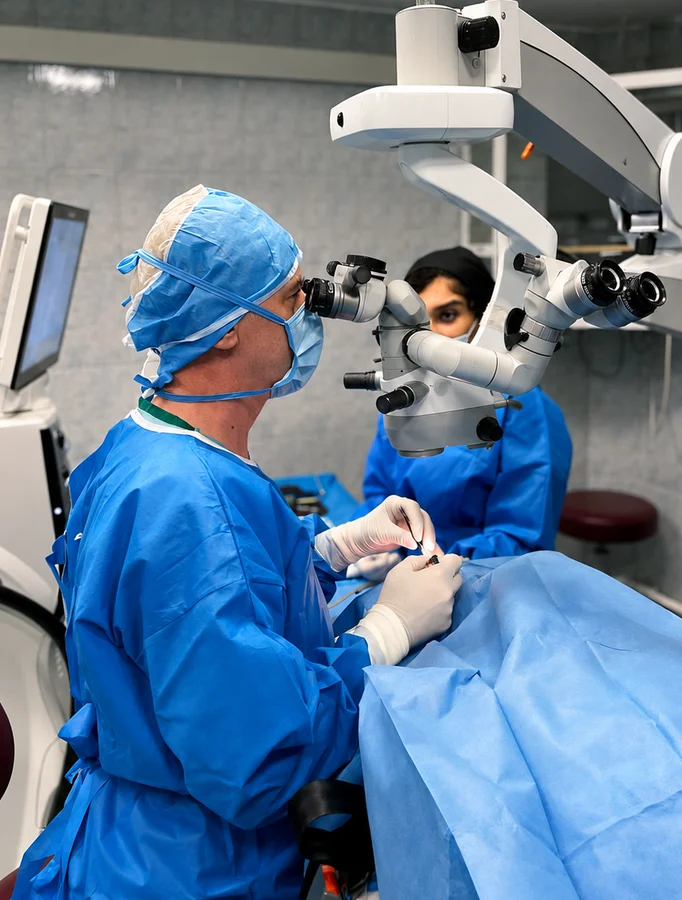
With the latest surgical techniques and a proven track record of thousands of successful operations, Dr. Abdolrahimi delivers reliable, consistent outcomes for patients. Comprehensive pre- and post-operative care is fully coordinated by the clinic team.
Contact our team for advice on the right surgery type or to book an appointment
Book Online Call the Clinic